
BEI HU
Dr Hu is currently PI of the Singapore Ministry of Education (MOE) Tier-1 research grant, ‘Using AI-assisted translation technologies to facilitate crisis communication: Developing a translation triage system in Singapore’ (2023-2026), the NUS Humanities and Social Sciences (HSS) Seed Fund grant, ‘Trust in technology-enabled health communication: The communication quality of translated health information in multilingual Singapore’ (2022-2025), and the Department Research Grant ‘Translation and language contact: Revisiting technology-enabled multilingualism’ (2022-2025). She received the 2023 Office of the Deputy President (Research & Technology) Grant for Research Excellence and the 2022 Open Access Journal Article Prize from the European Society for Translation Studies (EST) for her article ‘How are translation norms negotiated? A case study of risk management in Chinese institutional translation’ (Target, 2020). Dr Hu was recently granted the FASS Award for Promising Researcher (APR). This award is presented to researchers who have produced research that shows potential impact and promise. We congratulated Dr Hu and spoke to her about her research work. 1. How did you initially become interested in studying the socio-cognitive reception of translation? My interest in the socio-cognitive reception of translation began during my postgraduate studies on translated political discourse in Melbourne. I came across a front-page photograph of Li Keqiang, the Chinese premier at the time, attending an Australian Football League match during his 2017 trade visit. In the version published by The Australian, he was smiling broadly, wrapped in two team scarves. I found myself imagining how this image would be received by everyday Australians over breakfast: welcoming? slightly awkward? politically symbolic? or simply amusing? Later, I saw that Chinese media had portrayed the same event entirely differently: no scarves, just a composed leader shaking hands with athletes, conforming to the familiar aesthetics of state diplomacy. The interesting contrast suggested a gap between translated information and its reception across cultures.
2. What challenges have you encountered when conducting research on trust-building in high-stakes intercultural communication?  Researching trust-building in high-stakes intercultural communication has taught me that trust is both essential and elusive. It is widely discussed by policymakers and practitioners but rarely defined in a way people can actually act on. In practice, trust is highly situational and strategic. People may trust a translator in one moment and question them as soon as an outcome becomes unfavourable, which makes it difficult to measure consistently. High-stakes contexts add further complexity. Decisions are made under pressure, with unequal knowledge and limited room for verification. Collaboration can look like trust, but sometimes it is simply compliance or necessity, and distinguishing between the two is methodologically challenging. Power and identity also affect trust. Accent, ethnicity, authority, and familiarity can outweigh accuracy or competence. Translators’ labour is often invisible, meaning breakdowns caused by institutional constraints or technologies are easily blamed on individuals rather than systems. The rise of AI has introduced hallucinations and digital anxiety, raising bipartisan concerns about transparency, bias, and the loss of human agency. These challenges are precisely why the topic remains so compelling and relevant. Trust is a concept hazy at its edges: when it is tested, negotiated, or broken. Paying attention to such moments helps us see how translation actually works and how people come to understand one another across difference and create spaces for dialogue. 3. Your editorial article, ‘(De)constructing trust in high-stakes intercultural mediation’ (Translation Studies, 2025), co-authored with Valdez and Ragni, reflects on theoretical models of trust across diverse methods and settings in its introduction to a special issue on trust in intercultural mediation. What motivated your strong interest in trust and how did you come to understand the importance of the concept of trust in translation and interpretation?
Coediting this special issue allowed us to make trust visible. By bringing together ethnography, experiments, discourse analysis, community interpreting, multilingual crisis communication, and AI-mediated translation across different languages and regions, we saw trust proved to be the hinge between language, power, risk, and technology. We hoped to put trust in the spotlight as something that can be examined, questioned, and empirically studied, rather than taken for granted.
4. What is most interesting about the changing role of AI technology in translation? 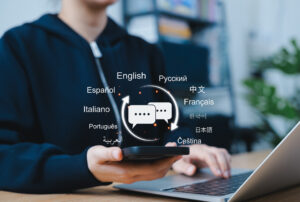 What I find most intriguing about the changing role of AI in translation is that it exposes what translation truly requires, including cultural reasoning, ethical judgment, and contextual awareness. AI can now produce fluent, authoritative-sounding output, but its tendency to hallucinate poses real danger, especially when readers cannot verify the source content. Paradoxically, translation appears more effortless, while the risk of undetected error and misplaced trust increases in high-stakes multilingual settings. and that’s where human intervention comes in. The politics of technology become more visible. Institutions sometimes place greater trust in AI than in human professionals or use automation to disperse responsibility when mistakes occur. As a result, AI changes where expertise is located within the professional ecosystem, making trust-building an essential competence in cross-cultural communication. Translators are increasingly expected to evaluate, contextualise, and postedit machine output. This drift calls on them to take on more active roles as risk managers, decision-makers, and cultural mediators. Future translators must learn to assess risk, justify intervention, and deal with uncertainty with some confidence. Furthermore, in September 2025, we organised a masterclass that brought together government stakeholders, journalists, industry experts, and students to examine the impact of AI on translation practices and to discuss the new challenges that future translators and communication professionals face. 5. Your article, ‘An alien among aliens: Translating multicultural identities in Singapore’s contemporary theatre’ (Journal of Specialised Translation, 2025), examines playwright and director Kuo Pao Kun (1939-2002)’s translator intervention in the English and Chinese versions of his self-translated Descendents of the eunuch admiral, which premiered in Singapore in 1995. How did you first learn about this play and the noteworthy differences in its English and Chinese versions? What made you pick Descendents of the eunuch admiral to analyse among Kuo’s many plays? I first encountered Descendants of the Eunuch Admiral while researching multilingual theatre in Singapore. At first glance, it reads as a historical narrative of the Ming dynasty voyager Zheng He. What struck me most forcefully about the bilingual play, and made me want to write about my experience of reading it, was the way it probes questions of identity, cultural orphanhood, power, and belonging. Long accustomed to living between languages, cultures, and traditions, I felt a strong sense of recognition in its pages.
6. Do you have any plans to expand your research to other domains of translation and interpretation in addition to health, political, and environmental communication, or expand your research sites to include additional countries or languages? Which domains and areas are you most interested in doing research about? Absolutely. I’m increasingly interested in exploring how emerging technologies—from machine translation and automated subtitling to AI-mediated interpreting—reconfigure trust, risk management, and public reception across different settings. 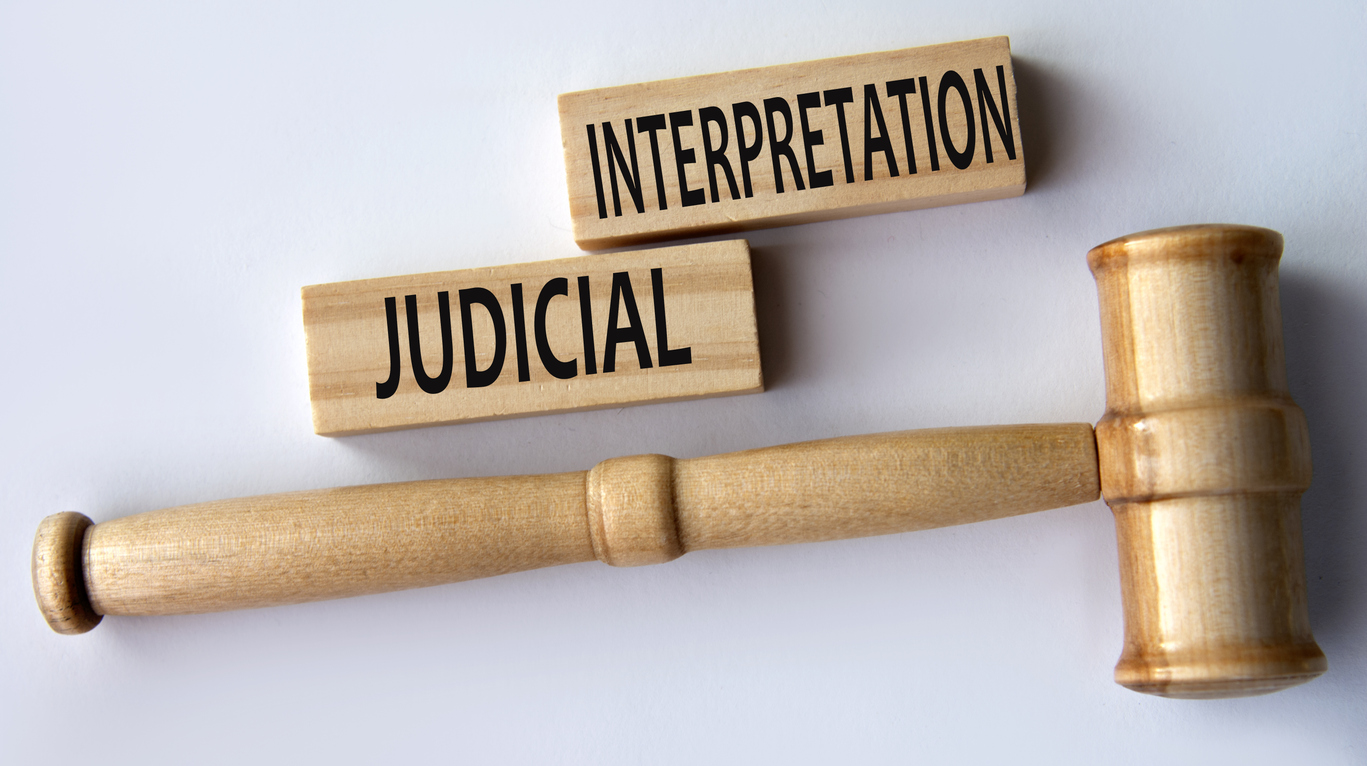 It interests me to consider whether risk-management strategies developed in one domain can be adapted and applied to another. Could crisis communication models inform courtroom interpreting? Could lessons from health interpreting improve public-facing government messaging? While the content differs, the underlying risk dynamics, such as uncertainty, responsibility, and trust, may surprisingly converge. We already have projects moving in this direction. One recent study compares how machine-translated climate-change media messages are received in Singapore, Poland, and the Netherlands, working across Chinese-, Portuguese-, and Italian-speaking audiences to see how risk is read differently. Another project examines remote interpreting in Australia’s health system, using Singapore as a comparison point to understand how trust in technology affects willingness to rely on mediated care. I hope that the empirical data will support a comparative, technology-aware research programme that examines how trust and risk circulate across domains, languages, and societies and how translation might help us navigate that uncertainty. 7. Who are your biggest research influences?
Anthony supervised my PhD in Melbourne and guided my thinking from the beginning. He encouraged me to look beyond the text and pay close attention to reception. Much of my later work on trust and risk developed from long conversations with him, first in Melbourne and later through many exchanges of emails, drafts, and questions.
I owe intellectual debts to many others, including colleagues in my department, across the Faculty of Arts and Social Sciences, and beyond NUS, whose conversations expanded my thinking on translation and intercultural communication. I am deeply grateful to them.
8. What is your research process? How does it connect to your teaching? I follow a broadly Popperian view that theories (and prevailing assumptions) should be tested, and even falsified, through data. I often think of Anthony Pym’s observation about Toury’s intellectual modus operandi: he would take what everyone assumed to be true and argue that the opposite, or almost the opposite, might be just as valid. I suspect I have inherited some of that impulse, and it informs both my scholarship and my teaching.  In audiovisual translation and translation technology classes, for instance, students conduct small empirical tasks to see what happens when theory meets workflow pressure. Does speed affect quality? They translate two comparable texts, one at a normal pace and one with 30 percent less time, and then compare quality, strategies, and style. Another exercise contrasts human translation with machine postediting to explore how creativity, effort, and speed vary under technological intervention. For me, research and teaching are inseparable. Theory—derived from the Greek theoria, meaning ‘a way of seeing’—helps us experience the world anew; enquiry provides evidence; teaching turns evidence into experience. I hope students leave the classroom having tested theory for themselves, able to identify problems that matter, and prepared to respond thoughtfully as translators and as engaged members of their communities.
9. Lastly, what are some of your most memorable teaching experiences at NUS? One of my most memorable teaching experiences at NUS has been redesign TRA3202 Mass Media Translation. With a one-and-a-half year Teaching Enhancement Grant, I was able to experiment with new pedagogical approaches, rethink learning activities, and, most enjoyably, bring technology and real-world media translation into the classroom.  We introduced multimodal and accessibility-focused tasks such as subtitling, live subtitling, website localisation, and social media translation. Students translated TikTok captions, edited autogenerated subtitles, and debated how AI affects creativity and authorship. Guided by feedback and project data, I updated the course annually by expanding the technology component, moving towards project-based assessment, and giving students more room to explore. What I remember vividly are some small moments: students staying after class to perfect subtitle timing, sending me AI-generated covers of songs they had translated, or arguing over machine-translation errors spotted around the neighbourhood. Each cohort contributes to the next version of the course, and hearing ‘I didn’t know translation could be this fun’ is one of the most rewarding aspects of teaching. I remain grateful for the university’s support in creating a space where research and teaching enrich one another.
Thank you very much for taking the time to answer these questions, Dr Hu, and congratulations again on being awarded Promising Researcher! |
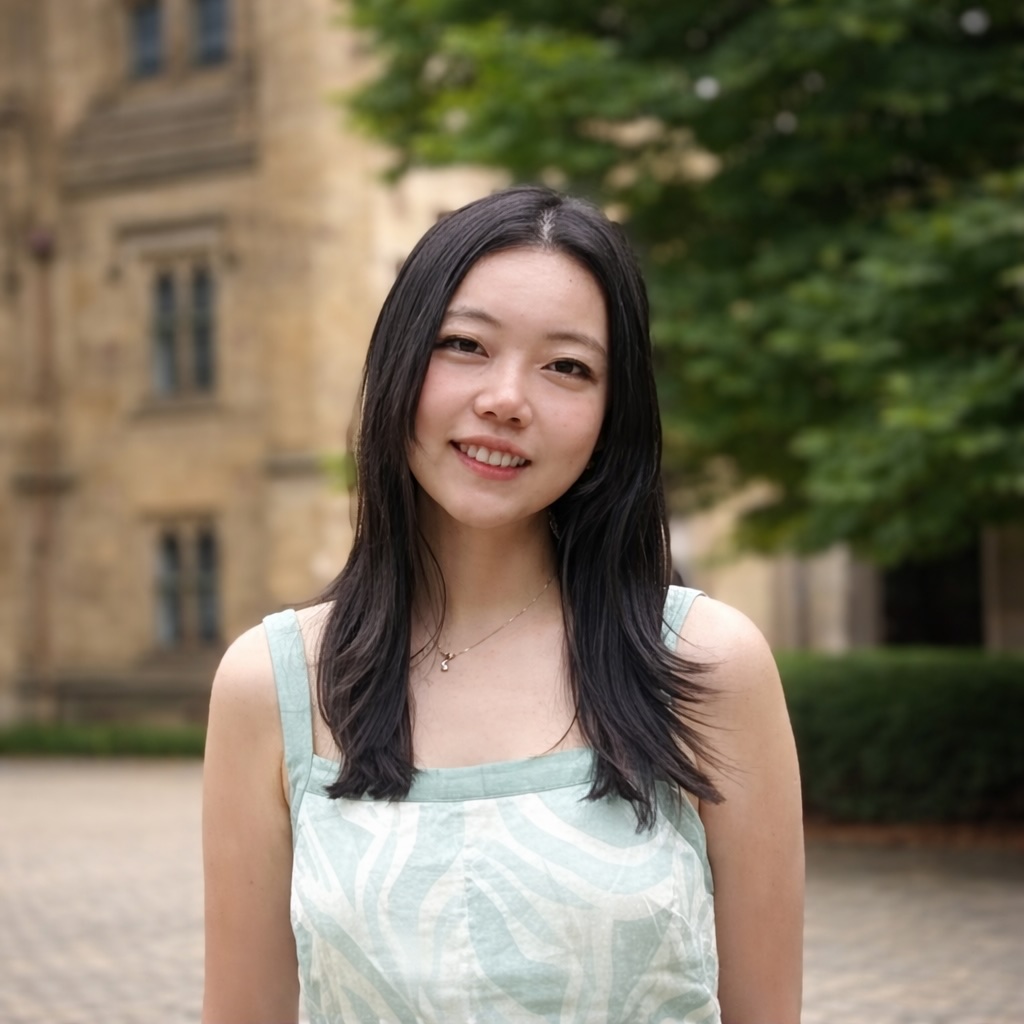 Bei Hu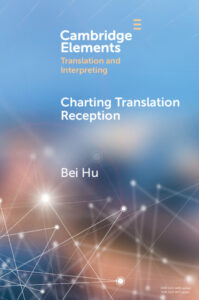
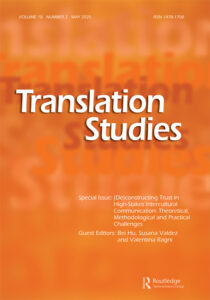 My interest in trust grew out of our ongoing work in high-stakes institutional settings, where communication either succeeded or broke down for reasons that could not be explained by textual accuracy alone. A translation could be fluent yet distrusted, a government interpreter could perform well yet still be doubted, and machine translation could be welcomed in one context and resisted in another. When mistrust took hold, people disengaged from translators and interpreters, over-relied on automated systems, or tightened control in ways that reduced human judgment. Misplaced blame often followed, typically targeted at translators rather than at structural constraints.
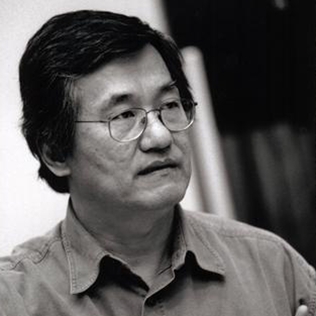 Kuo Pao Kun self-translated the play, staging the English version in June 1995 and the Mandarin version in August of the same year. When I began comparing them, the differences were striking. Lines that appeared metaphorical or generalised in English became more explicit and ideologically charged in Chinese. Those asymmetries piqued my curiosity. Why would a playwright known for his commitment to multilingualism and cultural critique choose to express certain ideas more openly in one language than in the other? That tension—between what is said, unsaid, and translated—became the centre of my enquiry into translator intervention. Most compelling is that the questions the play raises about national identity, multiracial relations, youthful disillusionment, and how we translate ourselves for others are the same ones we wrestle with today. If anything, its relevance has only increased.
 Anthony Pym and Andrew Chesterman have been the two greatest influences on my research, giving form to the way I approach translation research.
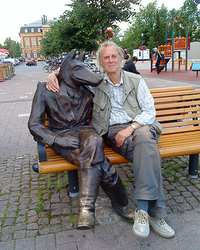 Andrew Chesterman has long been an intellectual compass. I even framed his autograph and placed it on the bookshelf in Anthony’s office. Anthony generously let me share that space, which meant he spent the next few years working under Andrew’s watchful signature. Since my student days, I sent Andrew questions and drafts (I’m still not sure how I had the nerve). He encouraged young scholars to question comfortable arguments and even to challenge his own theories. He always declared himself ‘retired’, only to respond within the hour with critical commentary. From him, I learned to be rigorous and rebellious, to write with care, and to remember that every idea must eventually answer his favourite question: so what?