

Documentary celebrates Professor Wang Gungwu’s life and scholarship on Chinese identity
October 2, 2025
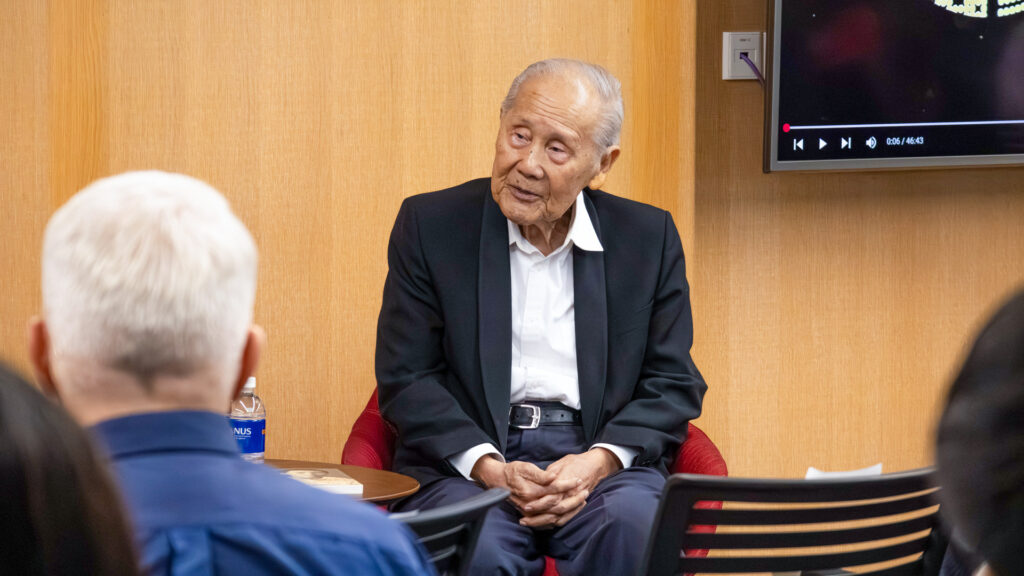
Scholars have long been fascinated by the Chinese diaspora and the richness of Chinese civilisation – exploring how migration shapes identity and belonging, and how Chinese philosophy has shaped China’s society and cultural life. Few intellectuals, however, have illuminated these complexities with greater depth and clarity than NUS University Professor and eminent historian Professor Wang Gungwu.
In recognition of his groundbreaking work on Chinese history, particularly focusing on imperial China, the relationship between China and Southeast Asia, and the evolving identities of Chinese communities in Southeast Asia, Prof Wang was awarded the Tang Prize in Sinology in 2020.
To showcase the achievements of its laureates to a wider population, the Tang Prize Foundation produces documentary films that explore the life, work and impact of each prize winner. In the South, Thinking China: From Chinese History to Nanyang Identity is a new documentary that delves into Prof Wang’s remarkable life and academic journey. The film held screenings in September at the University of Malaya and NUS.
Reflections on family, displacement and history
Filmed across Singapore and Malaysia, the 47-minute documentary traces Prof Wang's life and exploration of identity among diasporic Chinese. It presents his analysis of China’s internal historical dynamics and its interactions with its southern neighbours, offering a comprehensive understanding of the Chinese people's position in the international community.
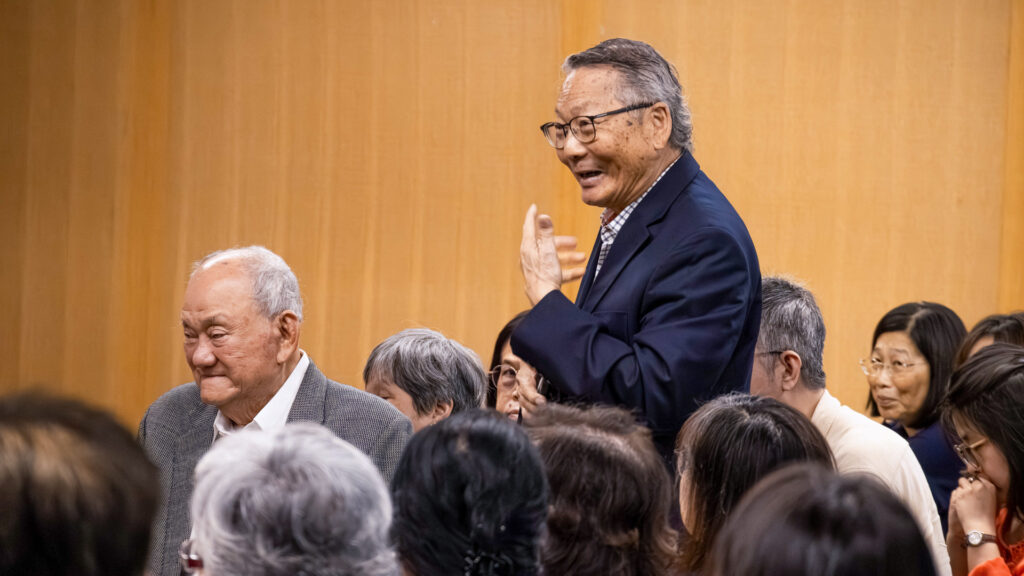
To inspire the public with his remarkable achievements, the film sought to portray Prof Wang’s life and trailblazing scholarship in an accessible way, said Dr Chern Jenn-Chuan, Chief Executive Officer of the Tang Prize Foundation, who attended the documentary’s premiere at NUS. The event was hosted by the Faculty of Arts and Social Sciences on 23 September 2025.
Thanking the Foundation for its moving portrayal of his life’s work, Prof Wang said: “The film is not a story about scholarship or history. It’s really a story of people who, wherever they are, have questions about where home is.”
This universal question has, in fact, shaped much of his scholarship and perspective on his personal experiences. The idea of “home”, he observed, is closely linked to the concept of “family”, which has long been placed at the heart of the Chinese civilisation’s moral and social order. Unlike a nation or an empire, a family is rooted in kinship. Over time, however, the family expanded into moral, social and political hierarchies. What began as a natural bond of belonging grew into complex structures of duty, power and control.
Prof Wang’s reflections on home and family were also shaped by his own experiences of displacement. Born outside China, he and his late wife, Mrs Margaret Wang, spent much of their lives abroad in countries like Malaysia, Australia and the UK. Paradoxically, this distance from their ancestral homeland allowed them to redefine “home” on their own terms. These reflections were also captured in memoirs titled Home Is Not Here and Home Is Where We Are published by NUS Press in 2018 and 2020.
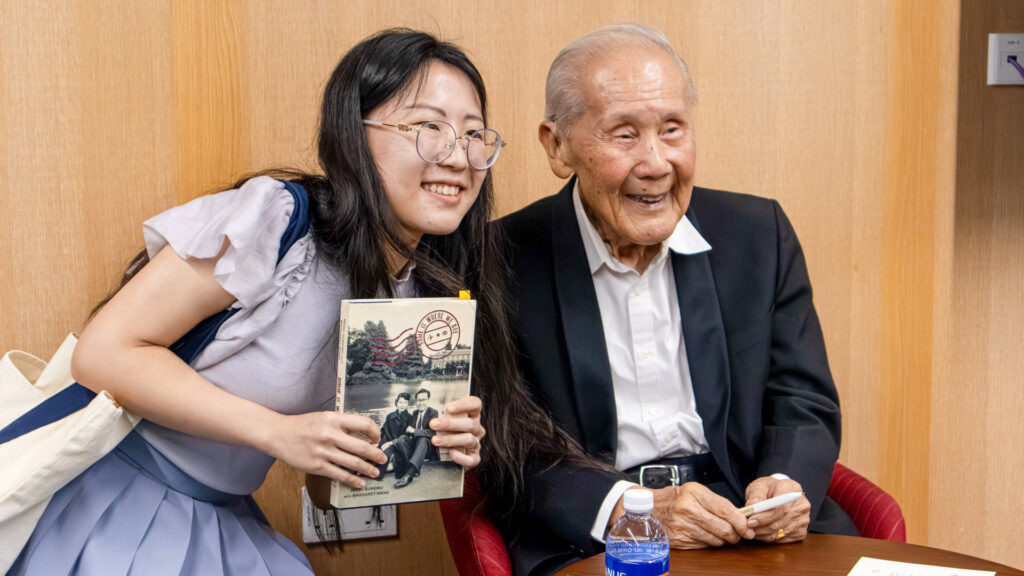
In response to a question from the audience, Prof Wang stressed that history should not be viewed purely as an academic discipline but as a lens to the past and its relevance to the present. The Chinese, he added, are not simply interested in the past for its own sake but seek to document the past to guide future generations on morality, governance and society.
He believes that belonging and identity are ultimately found in the stories of families, migrants and civilisations. “Everybody who left home anytime, anywhere, has a story to tell, and I dearly wish to hear more of them”, he said, observing that in sharing such stories, we rediscover what home truly means.
After receiving the Tang Prize in 2020, Prof Wang generously donated his prize money (a NT$10 million research grant) to establish the Margaret Wang Memorial Master’s Scholarship, in memory of his late wife. Through this scholarship, Prof Wang hopes to encourage research on literature – specifically the works of Southeast Asian writers who write in Chinese or English – as well as scholarship in Sinology. He has also established the separate Margaret Wang Master’s Scholarship in Literature with his personal funds.
The documentary, originally produced in Chinese, is available to the public on YouTube.
The Foundation is working on releasing an English version soon.
This story first appeared on NUSNews on 2 October 2025.