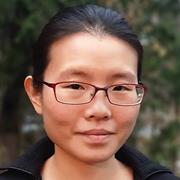

TING HUI LAU
Ting Hui Lau is Assistant Professor at the NUS Department of Sociology and Anthropology. She studies sociocultural, psychological, and medical anthropology, development and environmental change, Indigeneity and colonialism, and the borderland areas of East and Southeast Asia. Dr Lau received the Rodolph Virchow Prize for best article on Critical Medical Anthropology by the Society for Medical Anthropology of the American Anthropological Association and has published two articles in top-ranked journals, with several more on the way.
She is working on two book projects. The first, Cascades of Dispossession, focuses on Indigenous communities in Sarawak who have been dispossessed from their land because of the logging industry and must travel to Papua New Guinea, the Congo, and Brazil to engage in wage work. The second, Border Hackers: Surveillance and Sovereignty in Indigenous Asia, investigates and works with Indigenous Lisu people, finding ways to “hack” state borders by traversing national boundaries in technically legal but subversive ways. For this project, Dr Lau will work with Lisu tourists, cultural workers, activists, missionaries, and migrants who come from, visit, or reside in China, India, Myanmar, Thailand, Malaysia, Japan, and the US. Dr Lau was recently granted the FASS Award for Promising Researcher (APR). This award is presented to researchers who have produced research that shows potential impact and promise. We congratulated Dr Lau and spoke to her about her research work.
1. What sparked your interest in sociocultural anthropology? 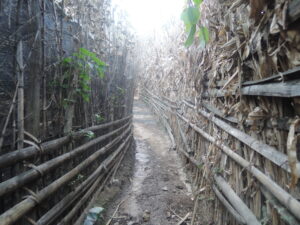 I first got to know about sociocultural anthropology through my undergraduate dissertation research on Kelabit and Penan customary land tenure systems in my home in Sarawak. At the time, I was studying Land Economy and was being trained to approach land largely through legal and economistic frameworks. Yet during my research I found myself repeatedly drawn to anthropological writings. I felt anthropology captured the complexities of local histories, everyday practices, and affective attachments to land that resonated very much with what I was observing and experiencing but that were often erased and invisible to policy makers. I was drawn to the discipline’s commitment to reflexive fieldwork and ethnography. Through the generous guidance of mentors and friends, reading anthropological work, and opportunities to travel and learn from others, I slowly found the courage to imagine myself within the discipline and to pursue a PhD in sociocultural anthropology, and eventually, an academic career.
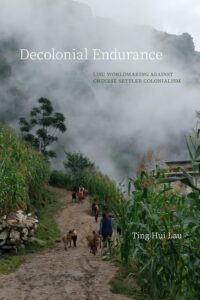
2.What are your biggest research influences? 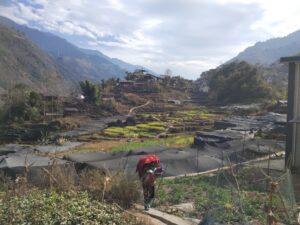 My work centres Indigenous worlds in Asia as a way of rethinking settler colonialism and Indigeneity in comparative and global perspective. My book Decolonial Endurance: Lisu Worldmaking Against Chinese Settler Colonialism focuses on Chinese settler colonialism and how Indigenous Lisu subsistence farmers maintain and sustain their lifeworlds under powerful forces of erasure. My second book project builds on this foundation to examine settler colonialism in Southeast Asia, studying the contextually and historically specific ways it unfolds in this context. This research focus is very much influenced by settler-colonial studies, which gave me a language for understanding colonialism not as a completed historical event, but as an ongoing global structure. Much of this scholarship, however, has tended to focus on classic settler-colonial contexts of the United States, Canada, Australia, and New Zealand, so my work seeks to extend these conversations to Asia to show how Asia is not peripheral to these colonial processes but implicated in and generative of them.
 At the same time, living and working with Indigenous communities in China and Southeast Asia has made clear to me the limits of frameworks developed in settler-colonial studies. While indispensable, it does not always fully capture the lived politics, contextually specific struggles, and agency of Indigenous peoples. Critical Indigenous studies helped me grasp these stakes more fully. Its attention to survivance, sovereignty, and relational lifeworlds offered me a way to understand not only the communities I study, but also my own position as a settler, and the deeper political and ethical stakes of these debates. Finally, I am deeply inspired by feminist thought and praxis. Feminist scholarship gave me tools for understanding how colonial relations are lived intimately—reproduced through everyday practices, affective experience, psychic life, unequal forms of care, and deeply gendered expectations. This orientation has shaped not only my intellectual commitments, but also how I move through the world as a daughter, a friend, a teacher, a Chinese-Malaysian settler, and a researcher. Feminist ethnographers, in particular, have taught me to approach ethnography as both an ethical and a political practice, one that demands accountability as much as analysis.
3. How did you initially become interested in examining the impact of development on Indigenous Lisu farmers living in the Nu River Valley along the border between China and Myanmar? 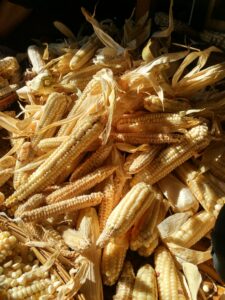 I became interested in the question of development through a combination of personal background and ethnographic encounter. Growing up in Borneo, where development processes and discourses are prevalent, I was already familiar with how development is often presented as an unquestioned good, even as it transforms Indigenous lands and livelihoods in uneven and often damaging ways. When I began spending time with Lisu farmers in the Nu River Valley, I was struck by a similar tension. Development was everywhere framed as progress and uplift, yet in everyday life I saw how road building, conservation measures, resettlement, and changing state policies were also disrupting relations to land, labour, mobility, and dignity in much more complicated ways. What drew me in initially was this gap between the official language of development and the lived experiences of people navigating its effects. Over time, that became a broader intellectual and political question for me about how Indigenous communities endure, reinterpret, and contest development under conditions not simply of change, but of ongoing settler-colonial pressure.
4. What challenges have you encountered when conducting ethnographic research in rural and semi-rural areas near the China-Myanmar border?  Conducting ethnographic research near the China-Myanmar border has involved many kinds of challenges. Some are quite practical: the terrain can be difficult, infrastructure uneven, language diversity challenging to navigate, and travel during certain seasons—especially the rainy season or landslide season—can be unpredictable and physically demanding. But the more significant challenges have often been political and ethical rather than logistical. Border regions are highly sensitive spaces, and conversations about land, mobility, development, Indigeneity, and state power are never neutral. People are often navigating multiple forms of precarity, so I have had to think very carefully about safety, trust, and what it means to ask certain questions in such contexts. Another challenge has been how to remain accountable to the people and relationships that continue long after formal fieldwork ends. Ethnographic research does not just end when funding runs out. It is built on trust, care, and ongoing responsibility, but sustaining those connections across distance while balancing teaching, research, and family obligations is not always easy. This remains something I continue to reflect on. At the same time, I hesitate to describe these only as challenges, because they are also part of what makes ethnographic research so meaningful and important. They remind me that research is not simply about gathering information, but about being shaped by relationships that endure over time.
5. How did you conceive of the concept of decolonial endurance? 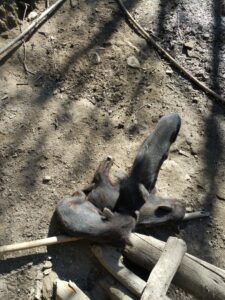 I began graduate school wanting to study Lisu experiences of loss and distress under Chinese development. But as I lived and worked with Lisu subsistence farmers—farming alongside them, attending church, and caring for animals—I came to see that loss was only part of the story. What also stood out were the everyday ways Lisu farmers held on to dignity, relationships, and meaningful forms of life under conditions of colonial dispossession. I realize that these practices were not always dramatic or easily visible political acts. More often, they took the form of intimate care, hard physical labor, attachment, and a stubborn refusal to let Indigenous worlds disappear on colonial terms. I developed the concept of decolonial endurance to capture this slow, effortful political work of sustaining worlds under conditions of loss and erasure. For me, decolonial endurance describes the practices of self-making and cultural worldmaking through which threatened lifeworlds are kept alive and colonial hierarchies unsettled. It offers an analytic for understanding the slow, everyday labour through which people sustain life under conditions of dispossession. More broadly, it expands our sense of what counts as political action by drawing attention to forms of conditional agency that may not look dramatic or openly oppositional, but are nonetheless vital to sustaining dignity, relationships, and Indigenous life. Its decolonial politics lie in the ways these practices refuse the totalizing terms of settler-colonial power by keeping other forms of relation, value, and worldmaking alive. In this sense, decolonial endurance offers a way of thinking not only about how people survive colonial pressures, but also the incompleteness of settler-colonial projects.
6. In your article, ‘Conjuring spirits: melancholic play and refusal among alcohol-drinking Lisu men on the China-Myanmar border’ (Journal of the Royal Anthropological Institute, 2023), you explore how non-Christian Lisu alcohol-drinking men engage in acts of refusal, in the form of melancholic play, to accept and conform to Christian and Chinese ideologies. How did you feel when witnessing these acts of refusal? When I first began spending time with non-Christian, alcohol-drinking men, I was still influenced by my Christian interlocutors, who often described them as lazy, wasteful, and self-indulgent. But as I grew closer to these families and came to understand more of their histories, and of the relations and memories honoured through alcohol drinking, I began to see these practices differently. I came to understand their drinking as a form of endurance: a way of maintaining ties to ancestral practices and spirits in a transforming context, and a way of refusing erasure. I wanted to write about these acts in a way that took their dignity and force seriously, without romanticizing suffering or overlooking the pain involved. They remain among my most respected interlocutors, and I am deeply humbled by what they have shown and taught me. For me, this is one of the most powerful possibilities of anthropology: its capacity to unsettle our own prejudices and to help us see the world from another perspective. 
7. In your article, ‘The afterlife of “doing medicine”: Birth planning, chronic illness, and regeneration among the Lisu on the China–Myanmar border’ (Medical Anthropology Quarterly, 2023), you found that the Indigenous Lisu community responded to the chronic illnesses that resulted from sterilisation measures they were compelled to undergo as part of China’s Birth Planning Policy in ways that helped them “survive, resist, and endure”. In what ways can other communities in similar situations learn from their experience? 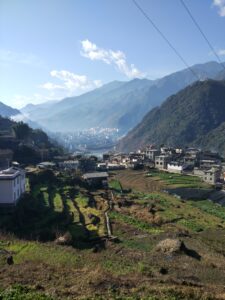 I would hesitate to suggest that other communities should simply replicate the Lisu experience, because each community has its own history and ways of responding. But the article does point to an important broader lesson: when chronic illness is produced by coercive state policies, healing cannot be reduced to rehabilitation alone. Public health must also attend to the longer histories of violence and dispossession that shape illness, and to the importance of cultural revitalization, community regeneration, and dignity in the healing process. In other words, recovery is not only about repairing damaged bodies, but also about restoring social worlds. And this is often a political project not just a purely biomedical one. The article also invites forms of solidarity across communities. The harms the Lisu endured are not unique to them; many communities around the world have experienced reproductive coercion, medical violence, and the enduring effects of state intervention. Attending to these resonances can help build solidarities rooted not only in shared suffering, but also in shared efforts to heal, resist, and renew life.
8. Do you have plans in the future to expand your research sites to include additional countries within and/or beyond Asia? Which countries are you most interested in doing research on? 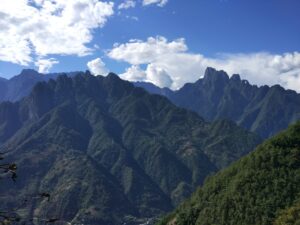 Yes. One direction I am currently developing is a project on settler colonialism in Southeast Asia, with a particular focus on Sarawak in Malaysia, where I am from. In some ways, this grows naturally out of my broader interest in how different parts of Asia relate to the global structures of settler colonialism. But it is also a deeply personal direction for me. It comes from a desire to reflect more carefully on my own position and ethical responsibilities in relation to Indigenous land, settlement, and colonial history in Sarawak. I also hope to continue and expand my work with Lisu communities by looking more closely at forms of pan-Lisu solidarity across China, Myanmar, Thailand, and India. I am especially interested in how Lisu communities navigate borders in ways that sustain a shared Lisu imaginary across nation-states. This would allow me to build on my existing research while opening up new questions about Indigenous solidarity, borderlands, and sovereignty across Asia. Over the longer term, I would like to develop these projects into a broader comparative study of settler colonialism in Asia, bringing East, Southeast, and South Asia into conversation. One of my larger goals is to show that Asia is not peripheral to settler colonial studies, but an important site for understanding how settler colonial formations unfold in diverse ways across the world.
9. Lastly, what are some of your most memorable teaching experiences at NUS?  My sociology and anthropology students have been incredible, and I always feel it is a real honour to teach in a department so committed to nurturing critical thinkers with a strong interest in decolonization. I have also been very fortunate to teach students at Yale-NUS College, whose intellectual curiosity, openness, and willingness to grapple with difficult questions left a deep impression on me. Some of my most memorable teaching experiences have been those turning points in class when you can see students beginning to think differently from when they first arrived—when conversations open up new ways of understanding the world, or when students bring unexpected and deeply thoughtful perspectives that reshape the discussion. Those moments are immensely rewarding, not least because they often change me as well: I often leave class seeing the world a little differently, having been challenged, surprised, and moved by what students bring into the room. I have also been deeply moved by my students’ spirit, imagination, and hope. There have been days when I have come to class feeling very disheartened by the state of the world, and the classroom almost organically became a kind of teach-in space where we think together about crisis, injustice, and what kinds of futures remain possible. For me, those moments have been especially meaningful and nourishing. They remind me that the classroom is not just a place of instruction, but also a site of collective reflection and political possibility.
Thank you very much for taking the time to answer these questions, Dr Lau, and congratulations again on being awarded Promising Researcher! |