

Wild learning in the Great Rift Valley: NUS students take on Kenya
October 17, 2025
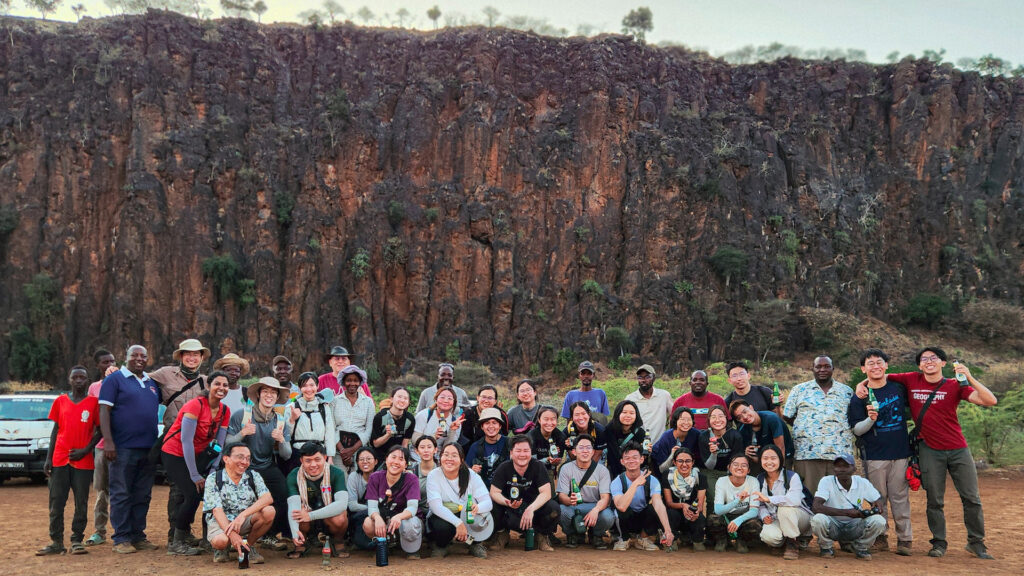
There was excitement in the air as 26 students from the NUS Department of Geography’sField Investigation in Physical Geography course got ready for a journey that would take them far beyond textbooks and lecture halls.
For many, Africa had always felt like a wonderland of vast savannahs, dramatic mountain ranges and wildlife seen only on screen. But this was no safari holiday. Over 11 days, students from NUS Geography and the Environmental Studies (BES) programme would traverse Kenya’s legendary landscapes, immersing themselves in the realities of environmental change, human-wildlife interactions, and the deep connections between people and place.
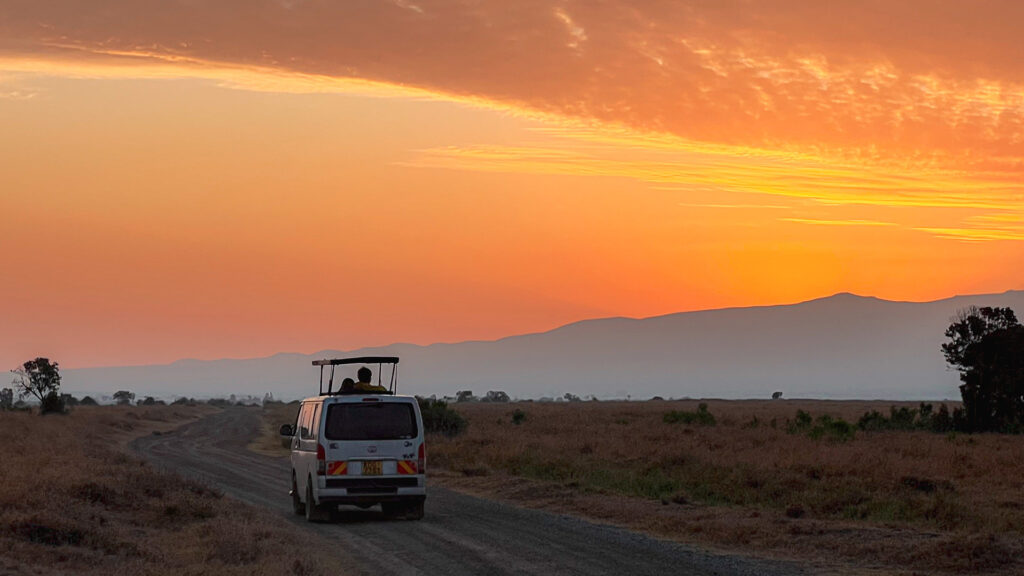
Far beyond teaching standard field techniques, the GE4220 course centres on understanding one of the most dynamic landscapes on Earth through the multiple lenses of earth system sciences, environmental change, people and land use, human-wildlife interactions, and biodiversity conservation.
Head of NUS Geography Professor David Taylor, who has been leading such trips for more than two decades, said the trip aimed to apply field techniques, study environmental change, and understand the deep interconnections between people, land, wildlife and climate.
“Students are taught that it is impossible to truly understand physical environments without also considering humans and their role in shaping them. Coming to terms with the diversity of environmental conditions here requires understanding the deep interconnections between people and place,” said Prof Taylor.
Fieldwork, Kenyan-style
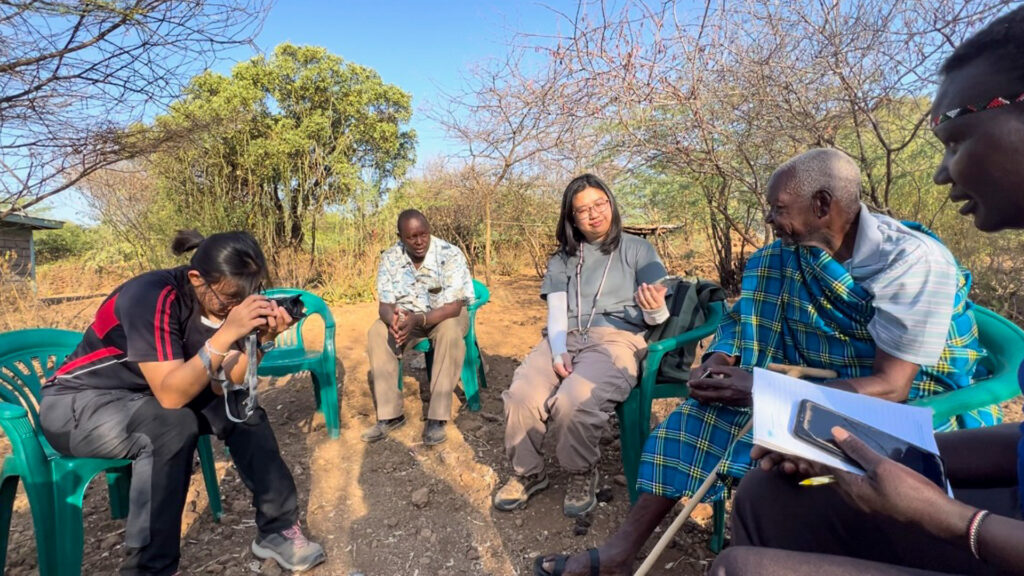
In Kenya, the students journeyed across the Great Rift Valley – from Nairobi to Naivasha, Baringo, Bogoria, Nakuru, and Laikipia. Each day was filled with site visits, wildlife encounters, and project work, which included conducting and filming community interviews as well as engaging in group discussions.
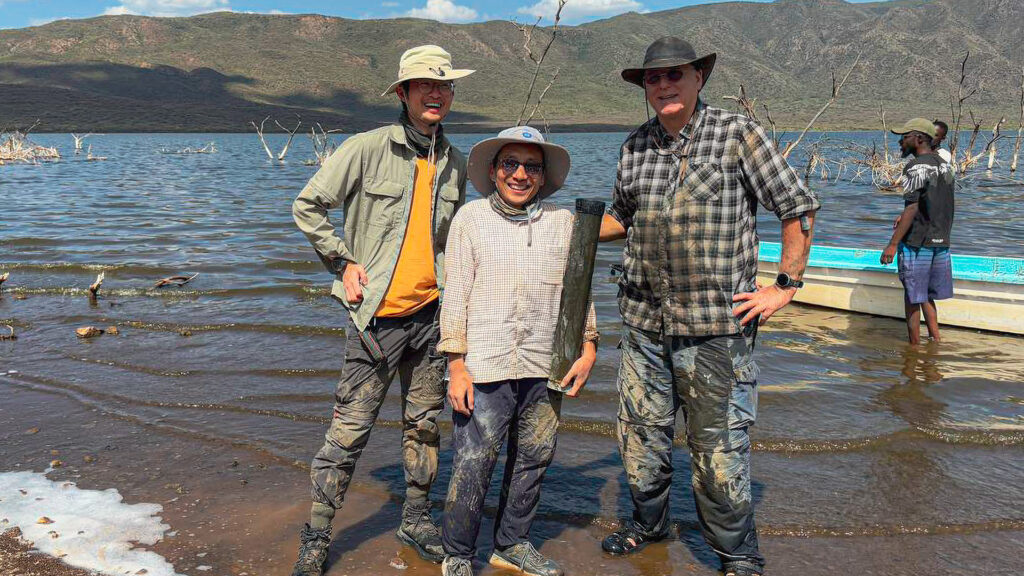
A highlight of the trip was a sediment coring exercise in a Rift Valley lake. Students assisted the researchers as they set out on a small boat, carefully deploying specialised equipment to extract a long column of lakebed sediment. The process, equal parts science demonstration and action scene, offered a rare glimpse into how past climates and environmental change can be reconstructed from the layers beneath the water. Between the rigours of scientific work, there were moments of wonder too: students witnessed flocks of pink flamingoes gathering nearby, their bright plumage adding an unforgettable splash of colour to the fieldwork setting.
Year 4 Geography student Pang Kah Wing reflected, “We learnt that sediments form a kind of history book of the lake’s climate and environment. But seeing the process in real time made me admire how much coordination and effort it takes. Research is exciting, but also tough and a little dangerous!”
The Rift Valley’s lakes were a key focal point throughout the expedition. From Lakes Naivasha to Baringo, Bogoria, and Nakuru, students were introduced to the diversity of lake systems – freshwater and saline, deep and shallow, and the communities that depend on them for their livelihoods. These lakes are not just ecological treasures; they are a source of life. Populations cluster around them for fishing, farming and water supply. Yet, in recent decades, rising water levels linked to climate change have reshaped both landscape and livelihoods, flooding villages, displacing families, and triggering profound hydrological changes. Students saw first-hand how these environmental shifts complicate already fragile relationships between people, land and wildlife.
Beyond technical skills and knowledge, the students also got a glimpse of Kenyan life. Having the opportunity to interview locals about education, Year 4 BES undergraduate Shaylie Yu was awed by the lengths families would go to secure schooling for their children – even selling cattle to pay school fees. “It was inspiring to learn how deeply education is valued,” Shaylie shared.
Lessons beyond the classroom that reshape perspectives
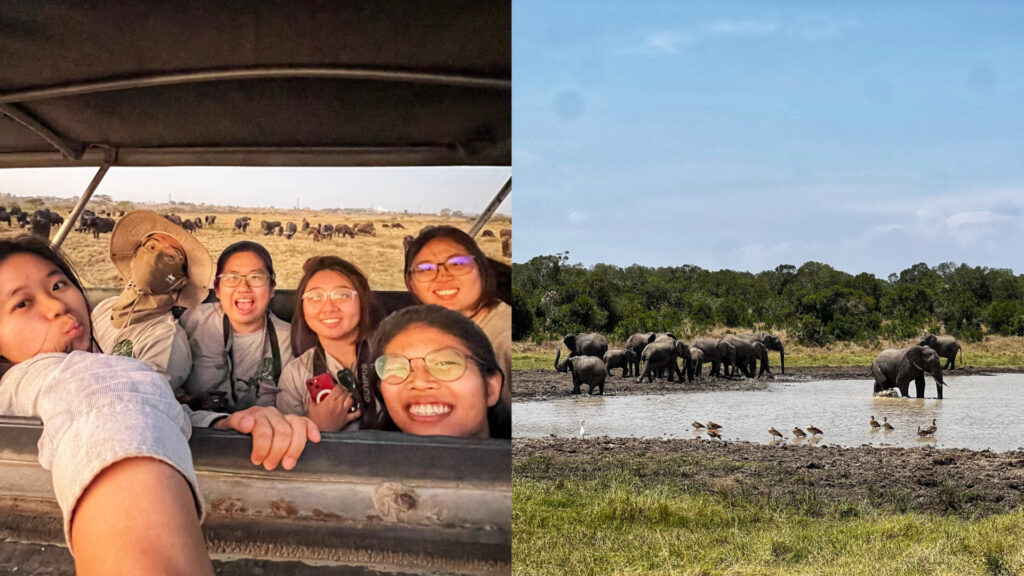
In addition to the enriching experiences gleaned from the fieldwork and field interviews, the students were often treated to wildlife encounters – lions, hyenas, giraffes and zebras were spotted, often within breathtakingly close range.
For some, the trip’s biggest impact was not visual but mental. Year 4 Geography student Chloe Lee admitted that before the trip, she assumed Singapore’s quality of life was unquestionably better than Kenya’s. But one conversation completely shifted her perspective. A local had asked with genuine concern, “You don’t have land in Singapore? Where do you build your house? Grow crops? Raise livestock? We are so lucky to live so well in Kenya.”
That interaction challenged Chloe’s worldview and made her reflect on how differently Singaporeans perceive value and well-being.
These moments, often unplanned, make field courses like GE4220 a transformative experience. Prof Taylor reflected, “Eastern Africa is the cradle of human evolution. I think we all carry a bit of Africa within ourselves. In that sense, going to Africa feels like going home.”
From fieldwork to fresh ways of thinking and understanding
Back in Singapore, each project group presented their findings through videos and presentations, raising issues that ranged from the impacts of land-use change on pastoralists to the role of religion in supporting conservation. The diversity of perspectives was as enriching as the fieldwork itself.
“It was eye-opening to see how everyone approached the same landscapes from different angles,” Shaylie reflected.
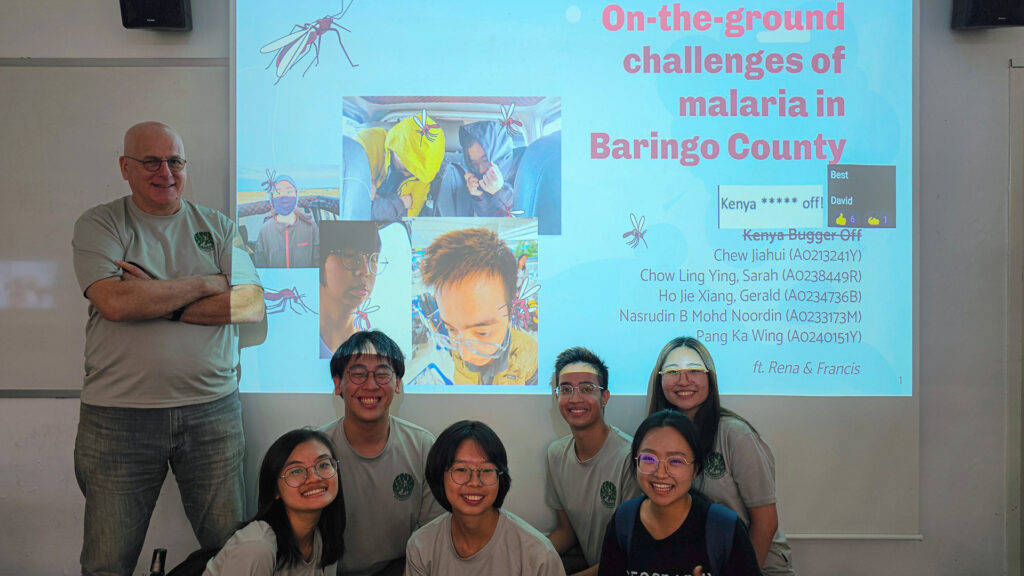
From wildlife encounters to ecosystem studies, from campfire conversations to candid insights shared by local communities, the Kenya field trip offered a rare blend of academic rigour, cross-cultural exchange, and once-in-a-lifetime experiences.
For the students, what began as a dream of “seeing Africa” transformed into a deeper understanding of how people and environment are inseparably linked – and how lessons from afar can inspire new ways of thinking back home.
Catch some video highlights below.
This story by NUS Geography first appeared on NUSNews on 15 October 2025.