

Mindset shifts for a kinder, happier Singapore
February 20, 2026
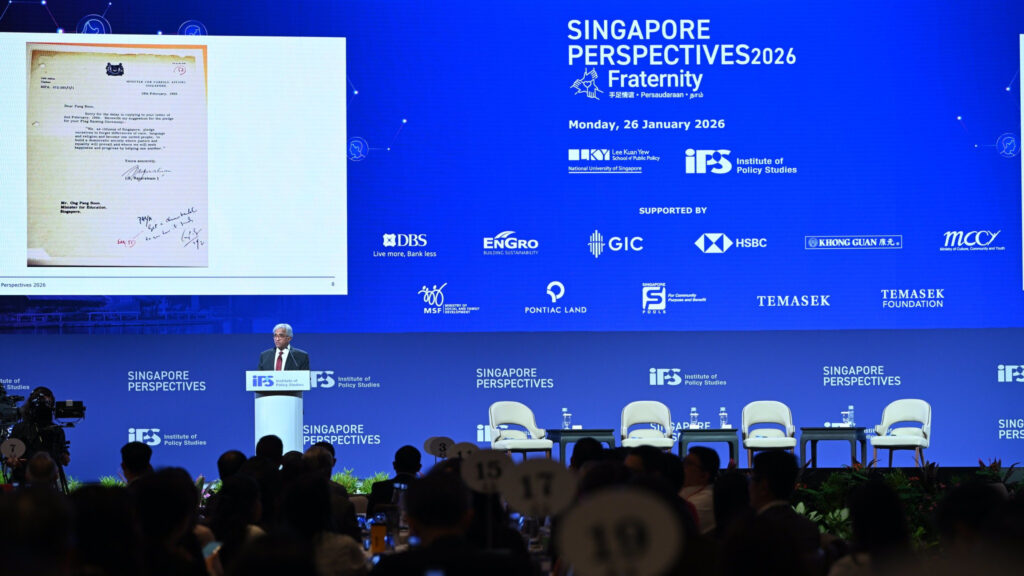
What does social cohesion have to do with happiness and the very notion of being Singaporean? Everything, if we examine the drafting and final phrasing of our National Pledge, said Mr Janadas Devan, Director of the Institute of Policy Studies (IPS) at NUS, at the annual Singapore Perspectives conference organised by the Institute in January 2026.
The conference’s discussions centred on the theme of Fraternity and explored ways to help Singaporeans connect with one another, even as technological disruption, cultural differences and competition pose a constant threat to unity. As the panellists discussed community and government interventions, a pattern emerged of key mindset shifts that must be embraced alongside such efforts for Singapore to become a kinder, more inclusive society.
Speaking on the second day of the conference, Mr Devan used the historical context of the Pledge to frame the importance of nurturing social cohesion in Singapore. The original draft ended with a commitment to “seek happiness and progress by helping one another”, which was later edited to read “achieve happiness, prosperity and progress for our nation.”
The two versions taken together imply that the pursuit of happiness is a collective one for Singaporeans.
Taking individual ownership
While Singaporeans often look to the government to address issues related to social cohesion, panellists at the first session, “Rethinking Social Capital in a Smart Nation”, stressed that no policy or programme can succeed if individuals do not choose to engage with one another and build interpersonal trust. Ultimately, the responsibility rests with each of us to take ownership and nurture connections in our own everyday spaces.
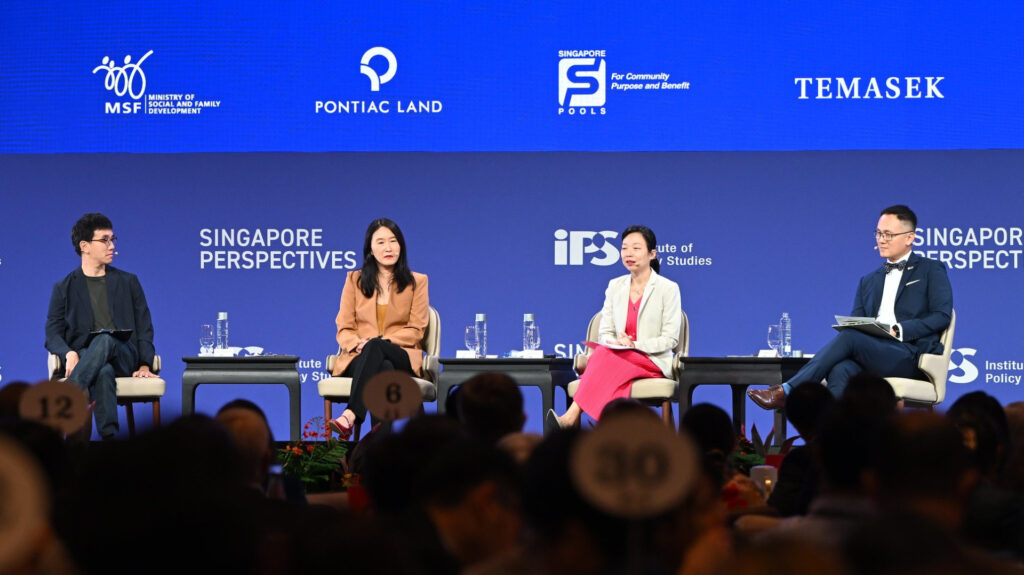
Ms Jasmin Lau, Minister of State, Ministry of Digital Development and Information (MDDI) and Ministry of Education, illustrated this through the different roles she plays – parent, sibling, neighbour and government official – and the contribution she can make in each. As a parent, she thinks about how she would manage her children’s screen time and encourage them to converse with new people, while in her role at work, she considers what she can do to keep online spaces safe.
She used a fellow panellist Mr Ang Jin Shaun’s social initiative, Stranger Conversations, as an example of how simple, individual actions can collectively strengthen social cohesion. The sessions are initiated by hosts with a personal story or passion, creating a space for participants to listen and respond. “We can’t all be Stranger Conversations (hosts). Someone sets it up, other people attend, other people share. And if you’re the person with the interesting story, then you come out and share because you can bring a group together.”
Serendipitous encounters are becoming rarer as we spend more time interacting digitally, but meaningful connections can still be cultivated if we are brave enough to reach out and allow others to respond, said Mr Ang. “It is sort of an act of service when you share something and make other people feel like they’re not alone, because this topic that you are sharing is meaningful to others as well,” he said.
“The question is, do we think that this level of connection is a need or a want? If we think it’s a want and this is a lower priority, then that’s going to get in the way of these serendipitous connections happening.”
Seeing differences as relational, not oppositional
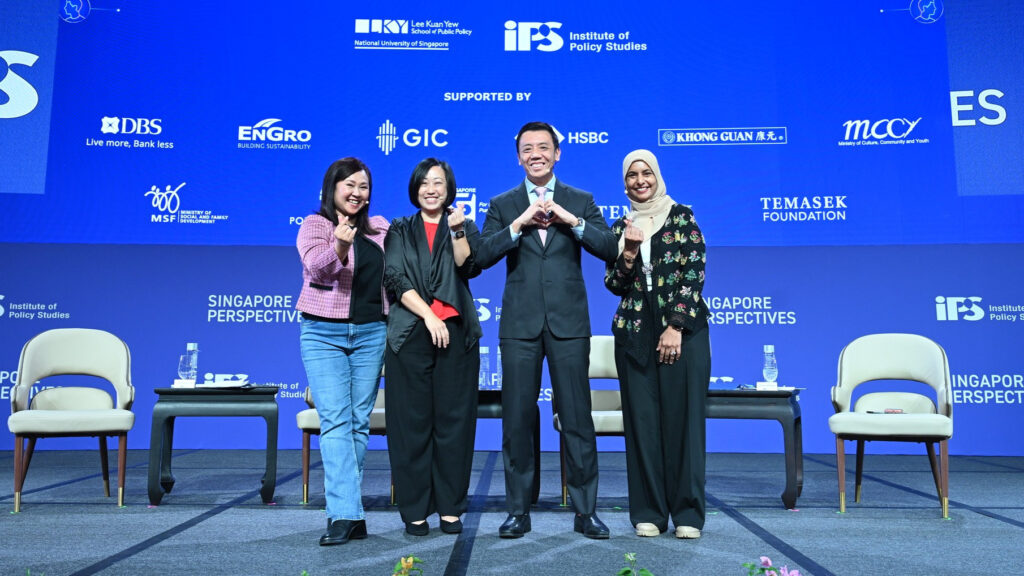
In the second panel, “Navigating Challenges to Social Cohesion,” panellists examined how Singapore’s diversity, sometimes seen as a fault line, can instead become a strength. Rather than fearing disagreement and division, Singaporeans can explore our differences through relationships and learn to see one another “as people, not proxies for communities or belief systems,” said Ms Shahrany Hassan, founder and director of non-governmental organisation The Whitehatters.
The Whitehatters offers safe spaces and skilled facilitation to help people interact through dialogue, sports and the arts, and discuss topics like race and religion. Shared Ms Shahrany: “It requires sustained effort to build trust and address tensions before they harden into divisions... Our task is not to reduce differences, but to ensure that differences are held in relationship rather than allowed to polarise.”
In addition to shared interests like cooking, enjoying food and playing football, public spaces are another lever that should be used to encourage informal friendships through commonalities, said Professor Elaine Ho, who is Provost’s Chair Professor of the Department of Geography at the Faculty of Arts and Social Sciences (FASS) and Research Leader for the Migration and Mobilities Cluster at the Asia Research Institute.
“Not everything has to be structured programmes… As we design Singapore, we also need to think about building these kinds of spaces where people can get together informally,” she said, highlighting sports fields and void decks, especially the more open designs in older estates, as examples of spaces that promote natural interactions.
Redefining merit
The third panel, “Building a More Inclusive and ‘We First’ Society”, grappled with the competitive nature that is inherent in Singapore’s economic model and characteristic of its people. The mindset shift they called for was to redefine merit not just through words, but through action.
Associate Professor Vincent Chua of the Department of Sociology and Anthropology at FASS explained three “Rs” of inequality that erode social cohesion: resource inequality, relational inequality and recognition inequality.
The gradual reduction in income inequality has partially addressed resource inequality, though wealth inequality remains a tougher issue to tackle. Meanwhile, social mixing in public housing, schools and workplaces helps to reduce relational inequality, but a divide remains between public and private housing residents.
Recognition inequality is “the last of the giants,” said Assoc Prof Chua.
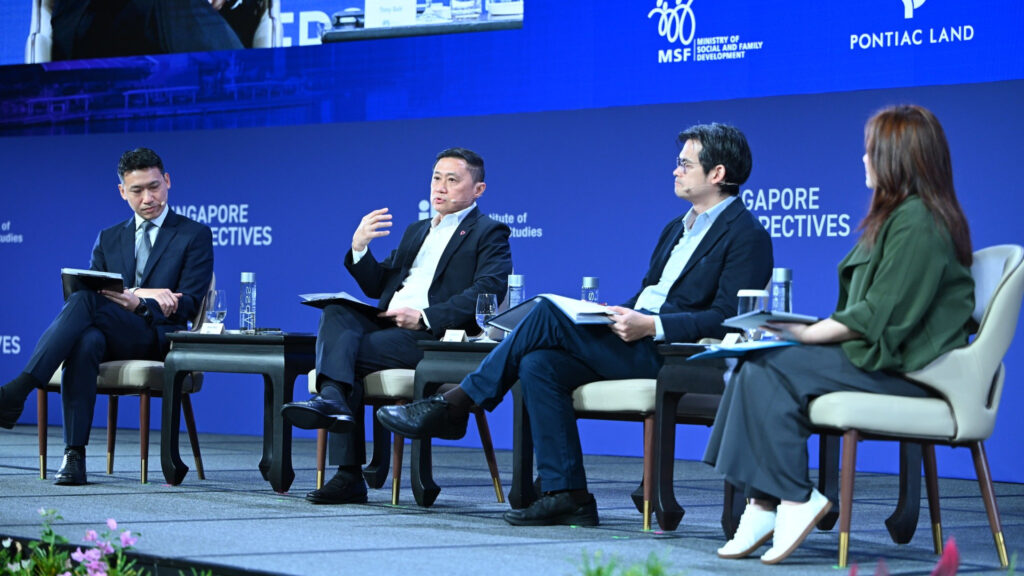
“Sixty years of meritocracy has taught us to see ourselves and others in a certain way – through the lenses of achievement,” he said, explaining that this perspective conflates resources with respect and ties perceptions of human worth to indicators of success and achievement. “How we see others determines how we treat them and how we relate to them, subsequently impacting social cohesion.”
Moving beyond the usual calls to redefine success, Mr Tony Soh, CEO of the National Volunteer and Philanthropy Centre, called on institutions to lead the way through their hiring processes and community involvement.
For instance, instead of hiring on the basis of academic grades or typical achievements, employers should consider a broader range of qualifying capabilities. Community contributions should be rewarded, such as through awarding scholarships to young people who are doing ground-up work and recognising employees who volunteer for community causes.
“When organisations begin to put more weightage on community contributions, that’s how institutions… can change that metric of success within your organisations and provide the substance to being able to encourage young people to take this seriously,” said Mr Soh.
This story first appeared in NUSnews on 19 February 2026.