

Better together: NUS Class of 2026 graduates working across disciplines for real-world impact
July 11, 2026
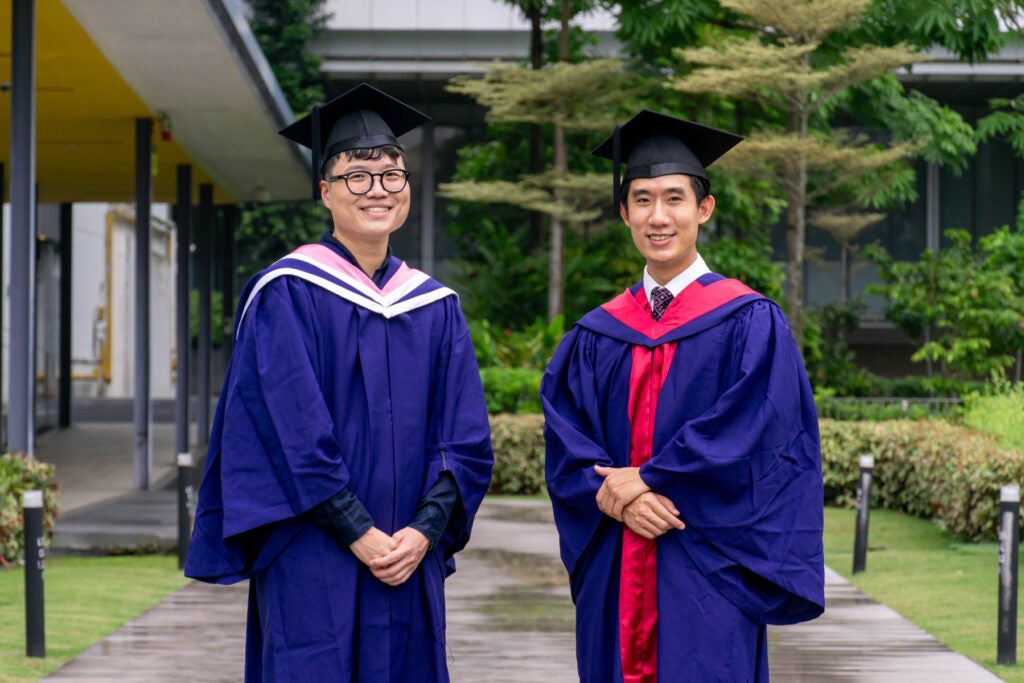
As the NUS Class of 2026 mark their Commencement, two graduates share how a drive to solve real-world problems led them to look beyond their own faculties for solutions. One co-developed a documentation tool for special education teachers, while the other launched a platform for cross-collaboration in healthcare. They are proof that a holistic education is not just about acquiring knowledge, but applying it to solve real-world problems.
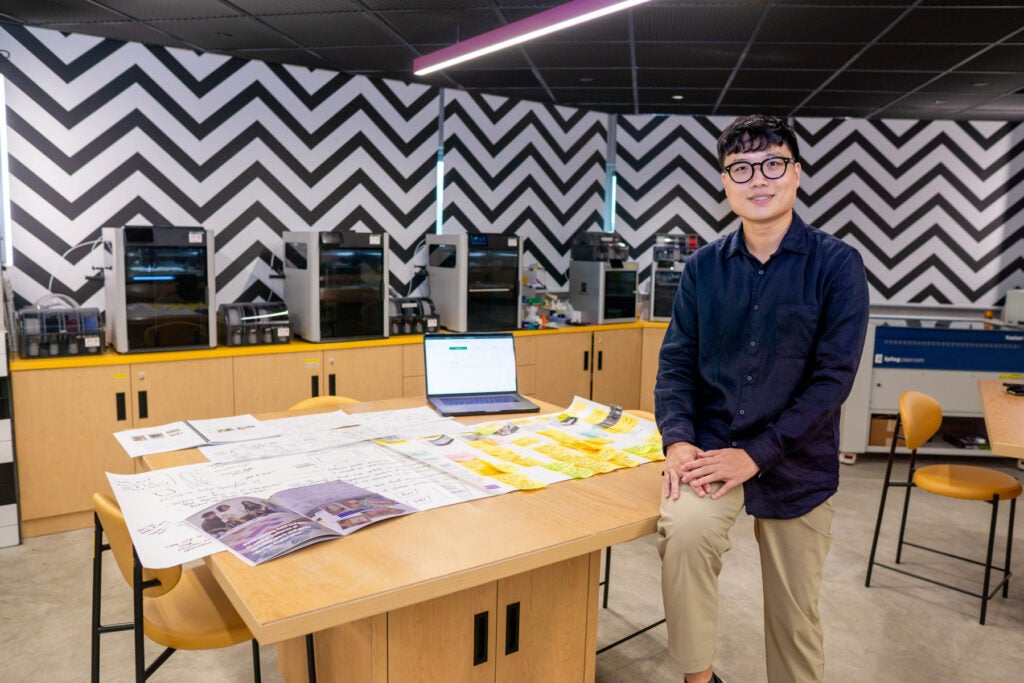
Givson Ong: Design for a cause
When teachers at AWWA School go on Inclusive Journey trips, they support students with special needs, while observing, documenting, and preparing information for post-trip reporting.
To keep track of students’ progress, they use a mix of hand-written notes, mobile apps, and phone cameras – an approach that allows for flexibility in the moment, but also requires observations to be manually compiled after each trip.
Seeing an opportunity to improve this process, NUS Industrial Design student Givson Ong led the development of FieldNote, an AI-assisted documentation platform designed to help teachers capture observations, organise student progress records, and generate structured draft reports after each trip.
The project was developed as part of the Innovation and Design Capstone at the College of Design and Engineering at NUS, supervised by Mr Eugene Ee and Adjunct Professor Chan Tong Leong. The design direction and research approach behind FieldNote were shaped by a concurrent design thesis supervised by NUS Adjunct Associate Professor Jung-Joo Lee, through which Givson developed his understanding of co-design, stakeholder engagement, and design’s role in complex care contexts. To bring FieldNote from concept to prototype, Givson worked with an interdisciplinary student team comprising members from Communications and New Media, Data Science and Economics, and Mechanical Engineering.
Givson led the project by defining the problem space, shaping the design direction, and assembling a team whose collective strengths spanned qualitative research, software development, testing, and quantitative evaluation.
“I wanted to do projects where you can really engage a broader community, but you can't hope to solve problems or challenges with just a single discipline,” said Givson. “I was very lucky that I was able to access different departments in NUS.”
His role was to bridge these contributions through design, translating field research and co-design insights into a coherent platform for documentation, reflection and reporting during Inclusive Journey trips.
Through co-design workshops, interviews, and pilot testing with AWWA teachers, the team developed a platform that allows teachers to document observations in a more structured way. FieldNote supports note-taking, student profiles, checklist-based scoring, and AI-assisted writing suggestions to help teachers record observations more efficiently.
The project with AWWA began in Givson’s final year at NUS as his capstone project. Before this, he had also worked alongside Adj Assoc Prof Jung-Joo Lee on projects involving local hospitals and different stakeholders in the healthcare ecosystem.
The experience has been gratifying. “I realised that design can have a broader impact on society, particularly for healthcare and community care. It pushed me to see that I can use my skills to support hospital staff or special needs educators,” said Givson, who plans to pursue a joint Master of Arts and Master of Science in Innovation Design Engineering at the Royal College of Art and Imperial College London.
He continues to work with AWWA teachers to refine FieldNote, with the goal of supporting an internal innovation grant application within AWWA School for further development and deployment.
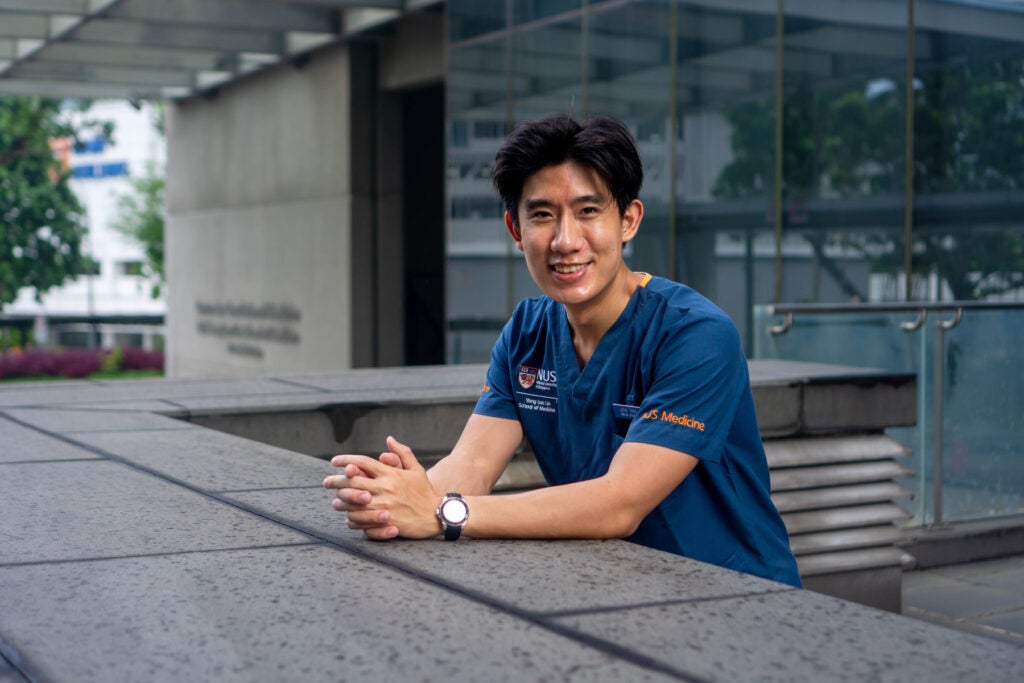
John Thng: Healthcare without borders
Healthcare challenges are complex, often calling for integrated solutions that bring together disciplines ranging from technology and engineering to social sciences and design.
Inspired by this need, NUS Yong Loo Lin School of Medicine (NUS Medicine) student John Thng founded NUS HealthX in 2024. “What we needed was a platform that could bring all these disciplines together,” he said.
The idea grew out of his clinical attachments, innovation projects and hackathons, where he saw that solving healthcare problems often took more than medical knowledge alone. Clinicians could spot the unmet needs, but turning ideas into practical solutions meant working with engineers, designers, programmers and entrepreneurs.
NUS HealthX was founded to bridge this gap - by bringing together people from different disciplines on a regular basis so they could exchange ideas and brainstorm solutions for real-world healthcare challenges. Beyond fostering collaboration, the platform also creates opportunities for students to explore emerging fields through regular programmes on medical 3D printing, robotics, artificial intelligence and healthcare entrepreneurship, alongside international exchanges with partner institutions in the United Kingdom, Germany and Japan.
One of the platform's standout achievements is Design for Medicine, an interdisciplinary module developed with the Division of Industrial Design under the College of Design and Engineering at NUS and the Centre for Healthcare Simulation at NUS Medicine. The module was introduced in 2025 with an enrolment of 24 design and medical students and could see future iterations. It has also launched five student-led medical device projects, pairing medical and design students to tackle real clinical challenges – several of which have progressed to faculty showcases and innovation grant applications.
"Students often approach the same problem from very different perspectives," he said. "When you bring those perspectives together, you can arrive at solutions that may not have been possible within a single discipline."
John's interest in turning ideas into impact deepened during an internship where he evaluated emerging medical technologies and healthcare companies across Asia, Europe and the US. The experience taught him that great ideas alone are not enough — scaling healthcare innovation takes clinical insight, technological capability, regulatory know-how and investment support, all working in concert.
Since its founding, NUS HealthX has grown from a simple vision into a vibrant cross-disciplinary community reaching hundreds of students a year. John has since completed his undergraduate medical studies and now works as a junior doctor in the Department of Orthopaedic Surgery at a local general hospital, but continues to chair NUS HealthX, which has secured grant funding, expanded its network, and built leadership structures so students can carry its mission forward.
"We're still a very young setup, but I hope HealthX can continue to empower future generations of students to take ownership of healthcare challenges and work together to address them," he said.
As his medical career unfolds, John hopes to make an impact not just through patient care, but by bridging healthcare, technology and innovation. "To me, that would be a meaningful career in medicine,” he concluded.
This story first appeared in NUSnews on 10 July 2026, as part of NUS News’ coverage of Commencement 2026, celebrating the achievements of NUS graduates from the Class of 2026.