

News
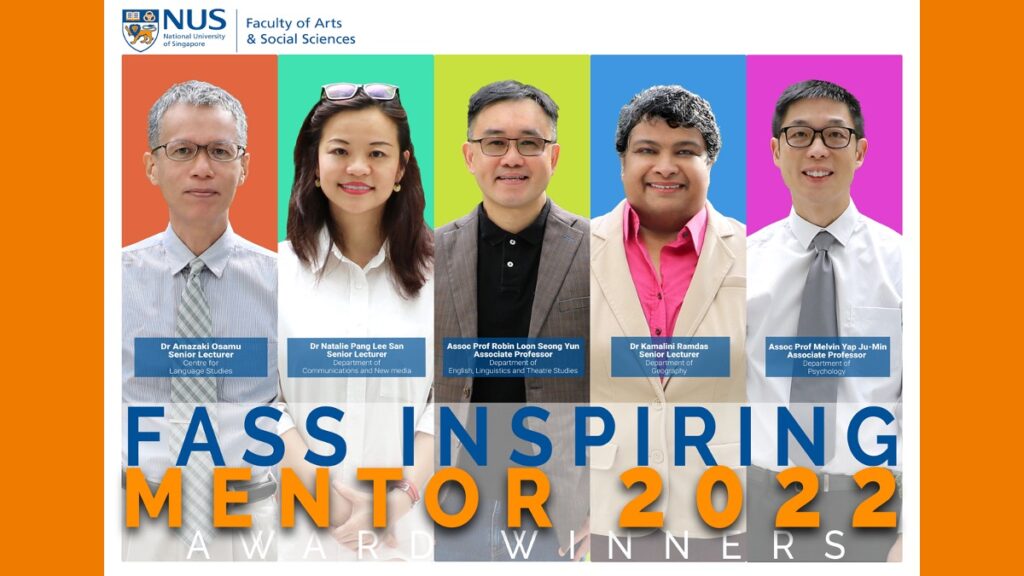
Congratulations to the winners of the 2022 FASS Inspiring Mentor Awards!

Find out how the University has developed and broadened our curriculum to better prepare our graduates for the swiftly evolving workplace, and how interdisciplinary learning can help students solve complex issues in our society.

By FASS Alumna Ms Audrey Tan (NUS Sociology ’13) who is Science Communication and Outreach Lead at the Centre for Nature-based Climate Solutions at the Faculty of Science and the Tropical Marine Science Institute at NUS.

Alumni couples and donors raise more than S$357,000 for financially-challenged NUS students.
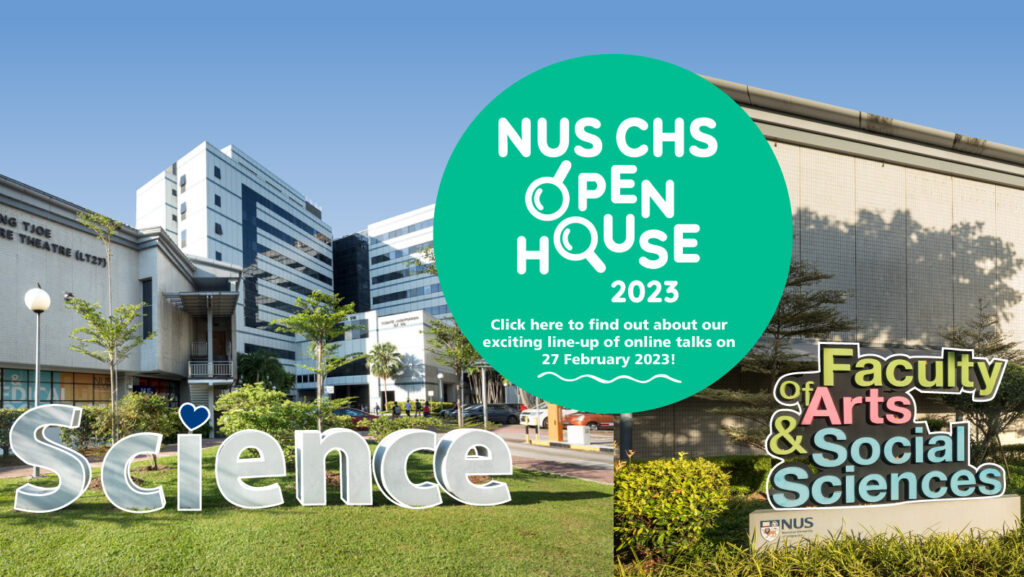
On 27 February, get the full download on the essentials of academic programmes, student life, career preparation, overseas opportunities and financial aid at CHS via Zoom in the ‘virtual’ edition of CHS@NUS Open House 2023.

Congratulations to Assistant Professor Cynthia Siew (NUS Psychology) on being awarded the Social Sciences and Humanities Research Fellowship for her project titled Measuring the Singaporean Mental Lexicon: Lexical-Semantic Norms for Singapore English Words! In Measuring the Singaporean Mental Lexicon: Lexical-semantic norms for Singapore English words, funded for S$747,188 by the Social Science and Humanities Research […]

Congratulations to Assistant Professor Kung Chien Wen (NUS History) on being awarded the Social Sciences and Humanities Research Fellowship for his project Sinospheric Subjects: Chinese Singaporeans, China, and Taiwan, 1976-1990! In Sinospheric Subjects, funded by the Social Science and Humanities Research Council in Singapore, Asst Prof Kung seeks to illuminate ordinary Chinese Singaporeans’ relations with […]

By protecting a forest instead of cutting it down for conversion into an oil palm plantation, for example, the developer of the land can raise revenue through the sale of carbon credits.

NUS graduates continue to be highly in demand, and command competitive salaries, according to findings from the Joint Autonomous Universities Graduate Employment Survey 2022.
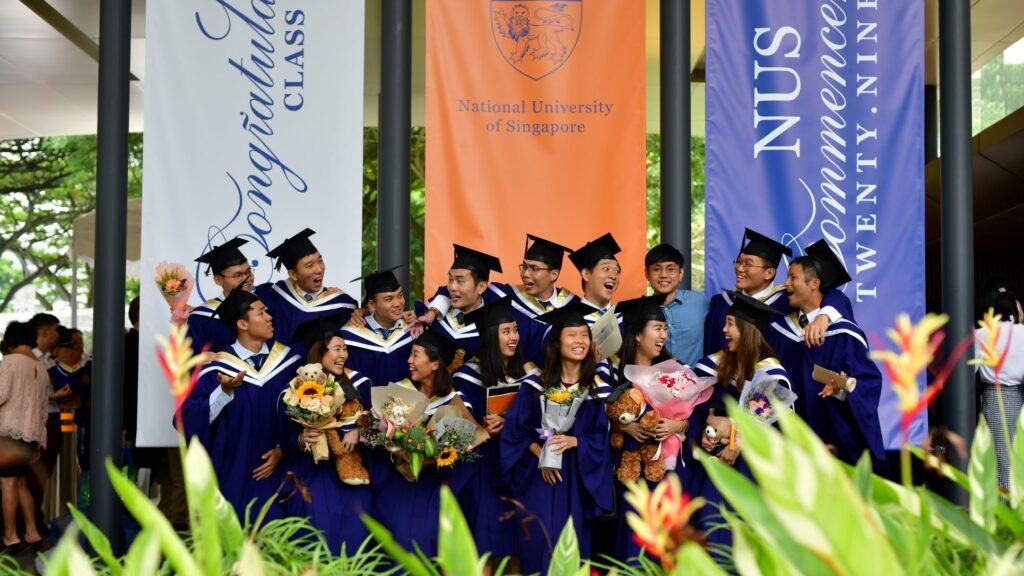
Alumni couples and donors raise more than S$357,000 for financially-challenged NUS students.