

Asking the big questions: Meet the five NUS undergraduate researchers behind tomorrow’s discoveries
July 14, 2026
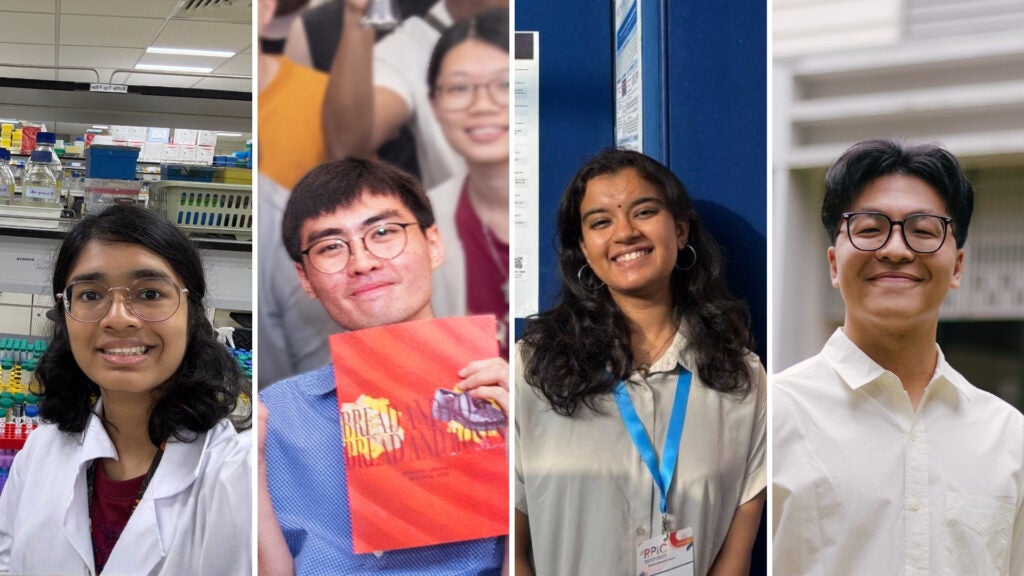
At the heart of the research experience lies the pursuit of new knowledge. Going beyond what is taught in classrooms and textbooks, these students from the NUS Class of 2026 have led inquiries of their own — pushing disciplinary boundaries and exploring new frontiers of knowledge.
Across diverse topics ranging from infectious diseases to language acquisition and the pedagogy of philosophy, undergraduates from the Undergraduate Research Opportunities Programme (UROP) at NUS have demonstrated how undergraduate research can deepen understanding while contributing meaningfully to society.
Coming from different disciplines, NUS UROP undergraduates undertake research alongside academic mentors. The programme equips students with the knowledge and skills required for the inquiry process. Since 2023, students have also been able to deepen their research experience through the Research Experience (REx) programme, which offers a suite of research learning topics alongside financial grants to support their projects.
Diverse topics: From playful philosophy to dengue defence
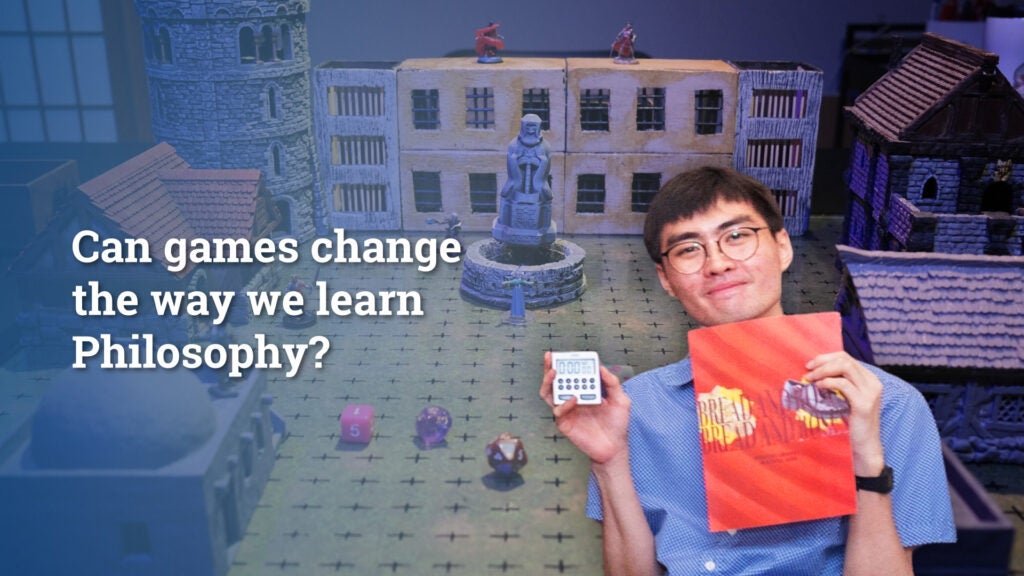
For Joash Lee, there is room for play even in a highly theoretical field like Philosophy. The NUS Philosophy undergraduate set out to investigate whether playful pedagogy could encourage students to engage with philosophy as a way of thinking rather than merely an academic discipline. Under the supervision of Dr Sherice Ngaserin, Joash analysed qualitative data from students enrolled in her Philosophy of Games course, where Tabletop Role-Playing Games (TTRPGs) were used to explore philosophical concepts and ethical decision-making.
Indeed, Joash found that immersing students in real-time gameplay that requires critical thinking, perspective-taking and nuanced moral reflection made abstract philosophical concepts more tangible and personally meaningful. His research opens potential possibilities for teaching philosophy – and other traditionally theoretical disciplines – in more engaging and impactful ways.
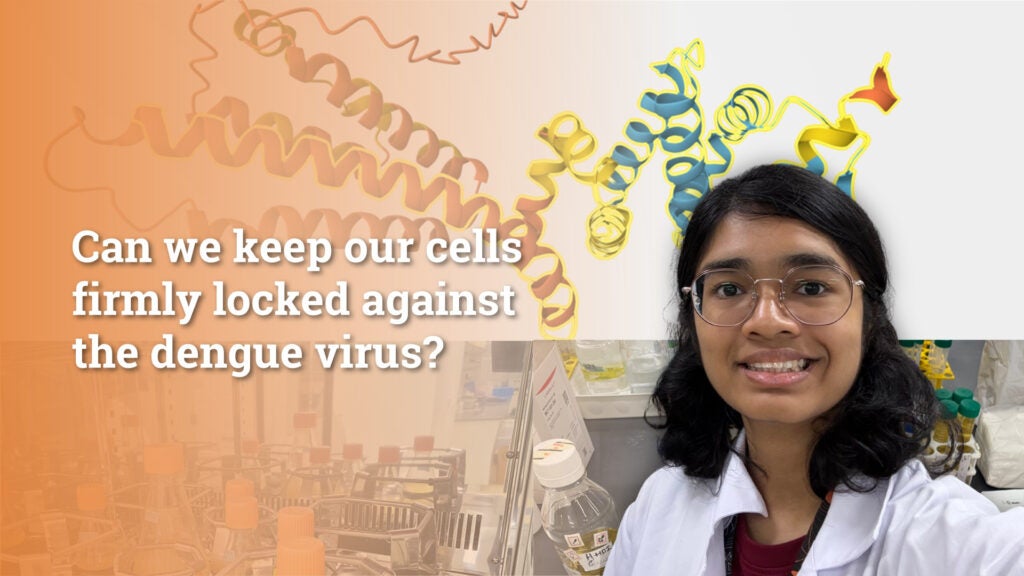
Instead of targeting the dengue virus itself, NUS Biological Sciences undergraduate Sruthi Annamalai is studying the mosquito that carries it.
Shifting the focus from virus to vector, she isolated the salivary protein produced by the Aedes aegypti mosquito – known as Neutrophil Stimulating Factor 1 (NeSt1) – which enters the body alongside the dengue virus and attacks the immune cells, where the virus then replicates. Through molecular laboratory techniques, Sruthi's research with Professor Jayaraman Sivaraman uncovered the three-dimensional structure of NeSt1 and its interactions with human immune cells, providing a much-needed blueprint for scientists seeking to block its function.
Because NeSt1 is linked to the mosquito rather than any of the four unique strains of dengue, Sruthi’s findings could potentially solve the longstanding challenge of developing a tetravalent vaccine effective against all of them. In dengue-prone tropical regions such as Singapore, this strategy could complement existing vaccines and strengthen efforts to curb transmission.

Medication labels could convey more than just essential information about dosage, risks and safe usage – depending on how they are presented.
Utilising eye-tracking technology, Ziv Ng worked with Dr Mike Hou Minzheng and Dr Wong Chin Yi at the Institute of Policy Studies' Social Lab to track how people visually engaged with medication labels that differed in language and message framing. He found that the latter significantly influenced receptivity, suggesting that the way information is presented can meaningfully shape how individuals engage with health-related messages.
Beyond medication labels, the study is especially pertinent to broader discussions on public health communication and policy design, as healthcare institutions increasingly rely on behavioural interventions to promote healthier choices. Identifying effective communication strategies that capture attention and increase engagement is therefore crucial in improving healthcare outcomes.
Future-focused: Accelerating discoveries with AI
By keeping pace with rapid advances in Artificial Intelligence (AI), UROP participants are adopting emerging techniques and best practices in their research methodologies, fostering a research environment that combines technological innovation with rigorous scientific inquiry.
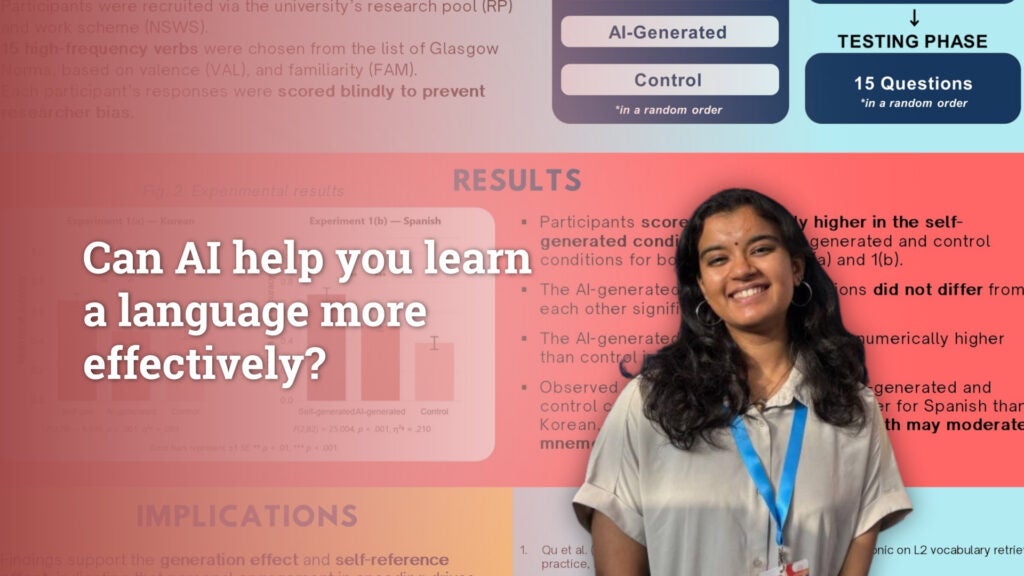
Working with Dr Steven Pan from NUS Psychology, REx Fellow Prathibaa Ramesh investigated whether self-generated or AI-generated mnemonics could help learners acquire Korean and Spanish vocabulary more effectively.
Despite AI’s growing capabilities, Prathibaa found that AI-generated mnemonics were less effective than self-created ones and performed no better than having no mnemonic aid at all. However, when learners took AI-generated mnemonics and adapted them in their own way, their learning outcomes matched those achieved through self-created mnemonics – suggesting that active engagement remains a key tenet in language learning.

Like humans, AI can evolve to solve complex problems more effectively and efficiently – this was Guo Wenjin’s ultimate goal when he embarked on his project with Assistant Professor Liu Yang from NUS Mathematics.
Borrowing from the concept of natural selection from Darwinian evolution, Wenjin used the OpenEvolve framework to see how AI could propose meaningful improvements to representational reasoning and coding tasks. Rather than making random modifications to computer programmes, he evaluated the AI’s performance and retained only the best-performing versions – a process which went through rounds of iteration. Over time, simple programmes evolved into increasingly capable solutions.
Refining AI through this evolutionary “trial-and-improvement” process highlights its potential in discovering better algorithms and solutions to complex problems in a range of fields, from scientific discovery to software engineering.
This story first appeared in NUSnews on 13 July 2026, as part of NUS News’ coverage of Commencement 2026, celebrating the achievements of NUS graduates from the Class of 2026.